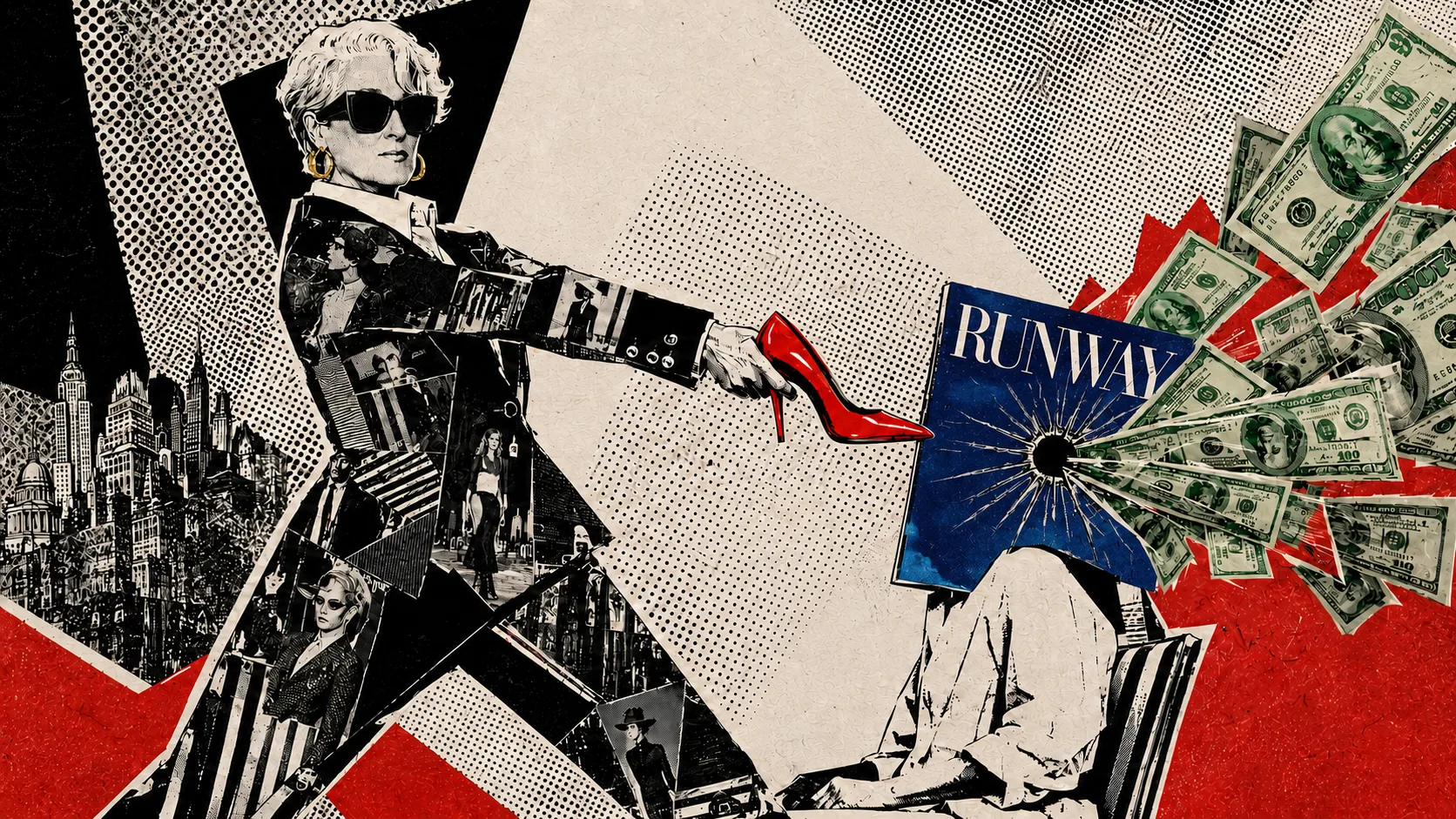
I’m sorry. The murderer isn’t the consultants. It isn’t the finance bros. It isn’t the tech bros. It isn’t TikTok, it isn’t the internet, it isn’t “the decline of print.”
It’s Miranda. The woman who made one bad decision in her life, and then executed flawlessly against it for twenty years.
She refused to stop being Miranda Priestly.
Miranda
So what did she do wrong?
She picked the wrong path.
Sometime in the 90s, fashion stood at that fork in the road. One road was where the mainstream was already heading. Hip-hop. Streetwear. Casualization. Air Jordans on every kid. Hoodies replacing blazers. The other road was where Miranda lived. Couture. Runway shows. Editorial authority. A monthly magazine telling you what cerulean meant this year.
She didn’t take the mainstream road. She refused to even look at it. She doubled down on the high fashion road. She decided that Runway sits above the masses, not with them.
In 1995, that was a defensible call. The mainstream wasn’t obviously winning yet. Plenty of smart people made the same bet.
Here’s the thing: every year after she made that call, the mainstream got bigger and the high fashion road got narrower. And Miranda just kept walking. Flawlessly. For thirty years. Never once stopped to ask if the road was still going somewhere.
That’s the bad decision. Not a meeting. Not a hire. A direction. She chose to diverge from the people, and then she executed that divergence so well, for so long, that by the time anyone noticed Runway was off the map, the map had already been redrawn without it.
She killed Runway.
Two roads diverged in a wood, and I—
I took the one less traveled by,
And that has made all the difference.
Pulled the Trigger
Runway didn’t die with one bad decision. Miranda killed it with thirty years of perfect execution. Every issue pushed Runway further from where people actually lived. Smaller audience, more abstract work. More abstract work, smaller audience. The room shrinks every year.
Look at Susan Fiske. Princeton, APS President, fifty years of citations. When critics caught her field’s papers failing replication, she wrote an op-ed calling them “methodological terrorists.” The system rewarded her for it. The system also dies for it. Some social science departments now publish papers that read like a different language, and nobody outside can tell if it’s brilliant or broken.
Fashion runs the same loop. Look at any major fashion week from the last five years. The clothes don’t look like clothes anyone wears. They don’t look like clothes anyone could wear. The industry rewards the abstract. The people running the industry reward each other for the abstract. Outside the room, normal people see it and think what the fuck is happening here bruh 💀
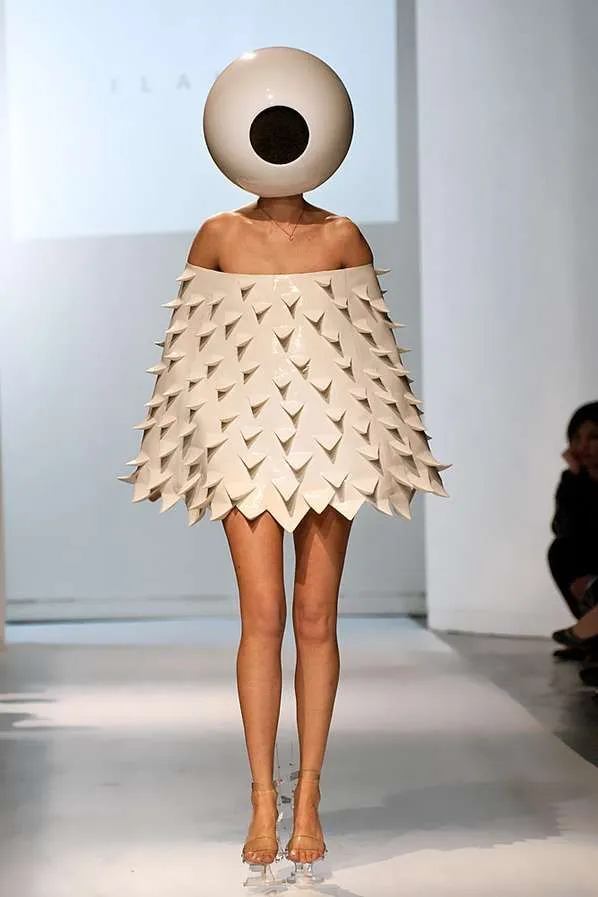
Money sees it too. Influencer marketing went from $1.7B in 2016 to $32B in 2025. Guess what, it came out of magazine ad budgets. No shit!
Talent walked too. The millions of smart, ambitious young women who would have killed for an assistant job at Runway in 1995 is now starting her own skincare brand. She’s running a styling agency that bills luxury houses directly. She’s a creator with three million followers who gets flown to Paris fashion week as a guest, not staff. She looked at the Runway job listing and laughed. Money goes where the people go, and people go where the money goes. Both maps stopped including Runway years ago.
In The Devil Wears Prada 2, Miranda calls the September issue so thin you could floss with it. She is announcing the death spiral on camera. The next scene she’s flying coach to grovel at Dior for ad pages. She knows. She just can’t stop. There is no exit ramp after thirty years on one road.
POW!
The road not taken
So what if she’d done the opposite? What if in 1995 Miranda had jumped onto the streetwear road, embraced the hoodie, killed the September issue, turned Runway into the magazine of the masses?
Here are the corpses of the people who actually did that.
- Complex: BuzzFeed bought it for $294M in 2021. Sold it to NTWRK for $108.6M in 2024. Down 63% in two years.
- Hypebeast on the Hong Kong exchange: revenue down 28% year over year, market cap under $40M, stock at HK$0.19.
- Highsnobiety sold a majority stake to Zalando in 2022 and became a content funnel for the e-commerce site.
- i-D got sold out of bankrupt Vice in 2023 to Karlie Kloss’s investment firm as a vanity asset.
Four corpses. Every one of them did what Miranda refused to do. Every one of them died anyway.
The road Miranda took killed Runway because the magazine form was carrying thirty years of escalating fixed costs and a shrinking audience. The road she didn’t take killed Complex and Hypebeast because the magazine form was carrying thirty years of escalating fixed costs and a shrinking audience. The fork in the road was real. The destination was the same.
Here’s what I mean by form: It is the container that carries content. Magazine is a form. TikTok is a form. Substack is a form. Podcast is a form. Newsletter is a form. People have a fixed amount of attention per day, and all these forms fight for the same pool of eyeballs. Miranda thought she was competing with other magazines. She was actually competing with TikTok, Substack, brand Instagram, and Business of Fashion. She didn’t lose only because she was bad at running a magazine, but also because magazine itself lost. (I worked out the full mechanism in my Paramount–WBD piece — same framework, different corpse.)
Pivoting within a dying form doesn’t save you from the form dying. It’s the same dead end.
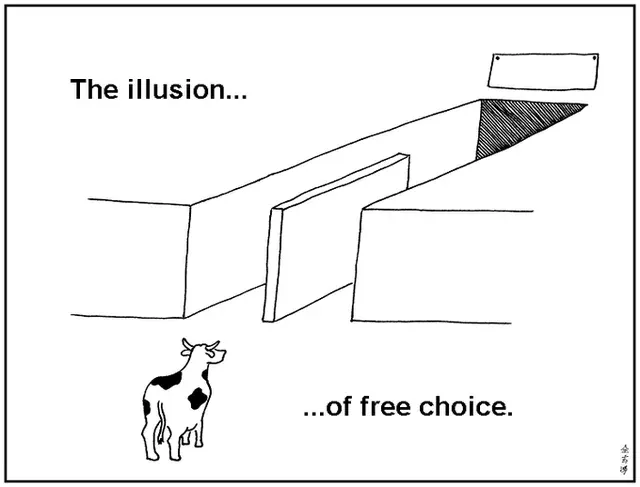
A Sink With Five Drains Wide Open
You don’t trust Sutton. You think I made this market-of-markets shit up. Fine. Open the MBA Year One textbook. Porter, 1979. Five forces. Let’s check the receipts.
Supplier power. The top photographers retired or got cancelled. The new generation works in-house at Loewe. Supermodels build their own brand on Instagram. Luxury houses became media themselves. Miranda used to make brands wait in her lobby. Now she waits in Dior’s.
Buyer power. Both sides walked. Readers cut Vogue’s print frequency from 12 issues to 8 by simply not subscribing. Advertisers moved $30B to influencer marketing. Creators provide attribution. Magazines provide vibes. In 2026, vibes are a write-off.
Substitute threat. Not one substitute. Four. TikTok ate the cadence. Substack ate the authority. Brand Instagram ate the production budget. Business of Fashion ate the B2B audience. Four orthogonal axes, simultaneously. That’s not competition. That’s a form with no remaining function.
Threat of new entrants. Textbook says low entry threat means protected industry. Good news…? It’s not good news. Nobody starts a new fashion magazine. The door isn’t locked. It’s wide open. People just don’t want to go in. Vogue spent thirty years escalating fixed costs until the entry ticket cost $500M a year, and now the table has $200M of total winnings on it. The math doesn’t work at any scale. It’s a stinky sewer. Nobody’s keeping new entrants out. New entrants just took one look, smelled it, and walked away (ew).
Internal rivalry. In a growing industry, leaders fight, weak players exit, survivors get bigger. In a shrinking one, the fights don’t stop. They just stop being external. Condé folded Pitchfork into GQ. Folded Teen Vogue into Vogue. Killed Self, Glamour print, Allure print. The CEO tells you 85% of revenue now comes from 7 of 23 brands like it’s a concentration achievement. It’s the autopsy report on a form eating its own children.
The whole industry is broken, it’s like a sink with five drains wide open, all of the profitably is just gone, regardless of how hard you try.

And then Aline Brosh McKenna in 2026 spent $100M making a movie that pretends a billionaire ex-wife can revive that corpse. LMAO.
The Eulogy
The movie knows, the screenwriter knows. And we know they know. They just can’t say it out loud, because the movie still has to sell tickets. So they bury the diagnosis under three layers of narrative deflection. It’s just sad at this point.
#1: Irrelevant Miranda. Critics called Streep “practically cuddly” (Variety), “more broadly comic and less icy” (NPR), “an undercurrent of defeat” (Ebert). Wrong read. Miranda isn’t softer. She isn’t tired. She is irrelevant. The whole appeal of Miranda Priestly was tough, toxic, and always right. People respected her because she sat on a throne and the throne was real. There is no throne in 2026. So the tough toxic tiger mom routine just plays as nonsense.
#2: The consultant villain. B.J. Novak plays a finance-bro heir who brings in consultants to gut Runway. Let’s be for real for a second. If you are inside a dying industry, what argument do you have for continuing to pour money into it? Andy Sachs wants to be a writer with dignity. Wonderful. Dignity is expensive. In that room, the consultants are the only people running CPR on Runway. Everyone else is performing nostalgia. The movie needs a consultant villain because the screenplay refuses to name Miranda, and because the consultants are the ones who would.
#3: The double sugar mommy. This is where the script visibly breaks. The writers needed a billionaire to save Runway. Fine, fairy tale. Except they needed two billionaires. Emily’s tech-bro fiancé Benji wants to buy Runway and run it with AI. The script rejects its own first answer because even the screenwriter couldn’t sell AI as salvation. So they wheel in Sasha Barnes, Benji’s billionaire ex-wife, who buys Runway out of presumably-alimony money. Be for real. Billionaires are not stupid. Billionaires need an ROI model. Benji at least had one: replace the irreplaceable arbiter with a scalable substitute. He’s wrong, because Miranda’s aesthetic authority isn’t replicable and a Miranda-shaped AI is a contradiction. But at least he was trying to solve the math. Sasha is solving nothing. Sasha is the screenwriter pouring more water into a sink with five drains wide open and praying the rate of inflow exceeds the rate of leak. It doesn’t. The water leaves. The sink stays empty. The form stays dead.
The Coffin
The last shot of The Devil Wears Prada 2 is Andy Sachs wearing a sleeveless version of the 2006 cerulean sweater. Patricia Field tracked down the original. She made a replica. Anne Hathaway cut the sleeves off and wore it as a vest.
You loved that sweater. Twenty years ago Andy fished it out of a clearance bin and the cerulean monologue was the founding document of the entire fashion-as-authority worldview. Tonight Andy wears its corpse with the sleeves removed, and the film expects you to feel something tender about that.
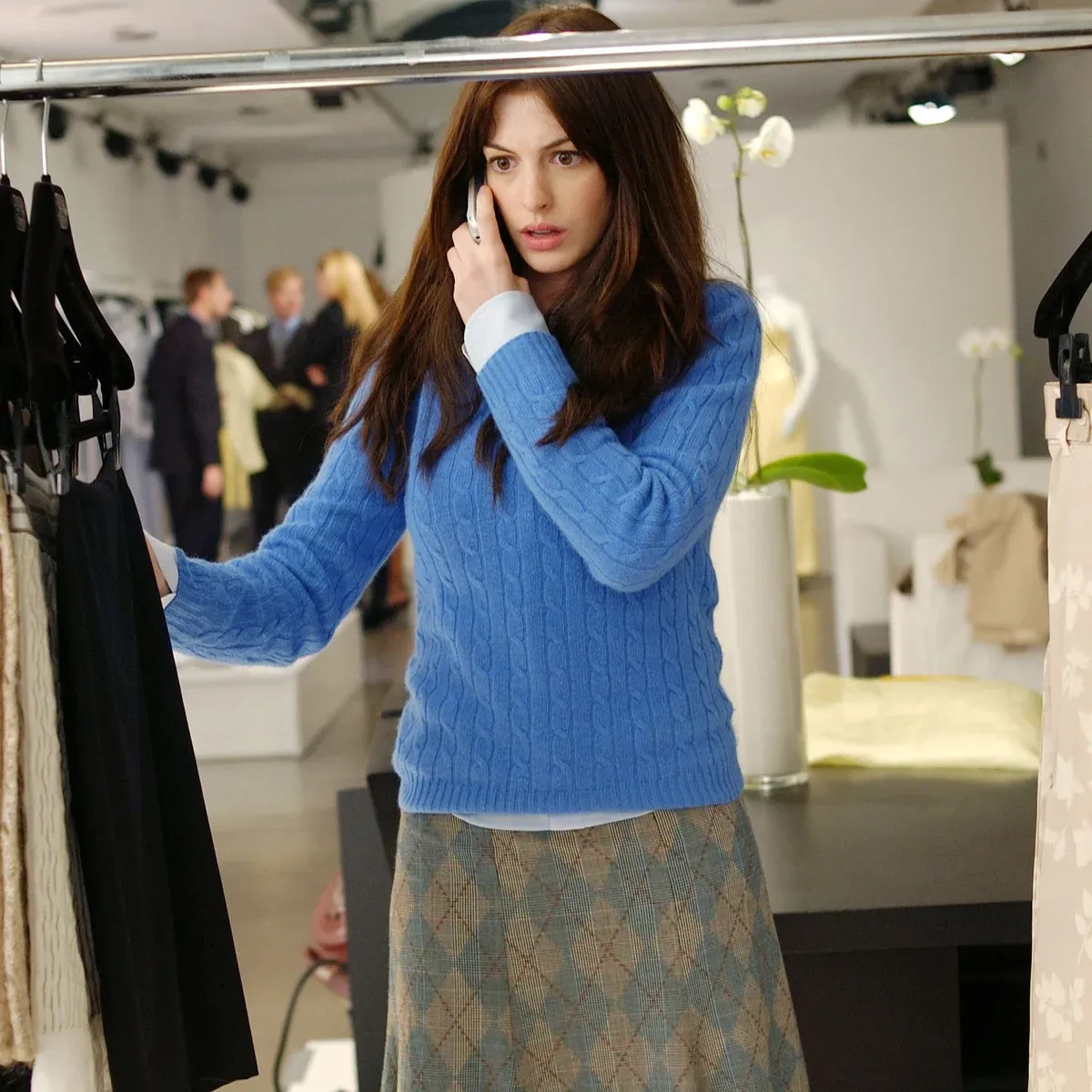
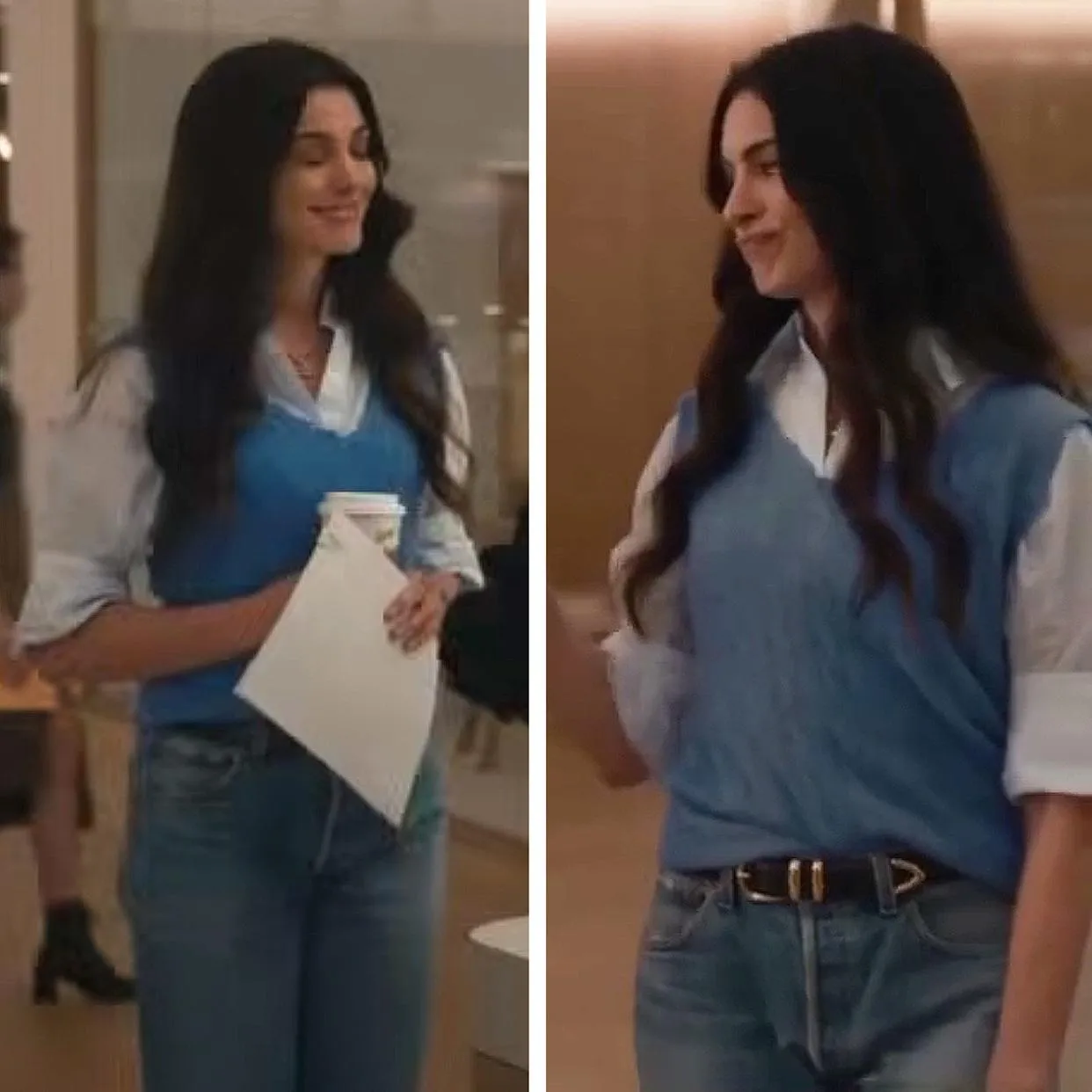
Don’t.
Miranda picked the wrong road in 1995. She executed flawlessly against it for thirty years. The flawless execution accelerated the collapse. The other road killed everyone who took it.
Runway didn’t need to be saved. Runway needed to be allowed to die with grace. The consultants understood. The screenwriter understood. The audience? I don’t know.
You paid $20 to watch Miranda Priestly kill Runway one more time, in slow motion, dressed in Prada, scored to nostalgia.
But the truth is simpler than that.
A boy of thirteen finds a real gun on the road one summer. Not knowing better, he pulls the trigger. No one dies. No one is wounded. He thinks the gun was empty. Years pass. He is thirty, or older. He is walking down a road. He hears a faint sound behind him, like wind. He stops. He turns. The bullet hits him between the eyes.
— Shi Tiesheng